Nothing original here, at least not from me. This table can be found on the Wake Forest University campus. It was created by art students Nazila Alimohammadi and Anna Clark for a class project in 2003. Check out the Neatorama article for more details.
I like it.
Sources:
Digg
Neatorama
Showing posts with label science. Show all posts
Friday, October 30, 2009
Tuesday, October 20, 2009
Don't Mess With the Bojan
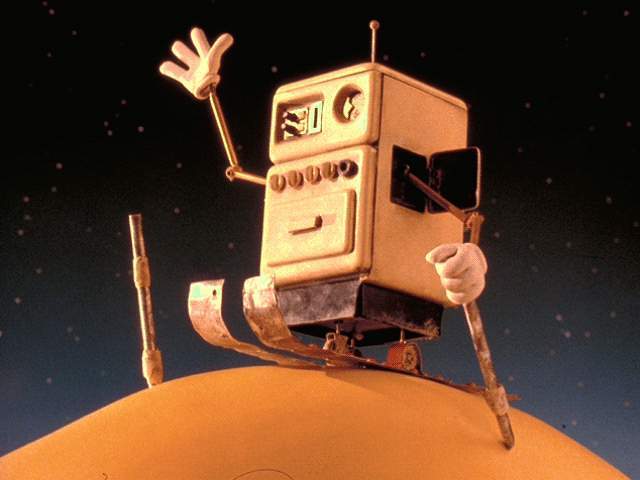
It's not exactly Wallace and Gromit's A Grand Day Out - but it's close. Bojan Nemec of the Institut Jožef Stefan in Slovenia has created an autonomous skiing robot.
There have been skiing robots before, but this one is larger - Nemec's robot is large enough to use off-the-shelf skis.
A laptop controls the movements, using gyros for balance and a vision system for maneuvering around gates. It also has a GPS, but that is to measure speed, not for direction.
There are additional videos on the IEEE website.
Sources:
IEEE Spectrum (via Neatorama)
Popcorn (photo)
Japan Times
Monday, October 5, 2009
Bra Gas Mask
In case you missed it, the IgNobel prizes were handed out last weekend by the Annals of Improbable Research. The IgNobels are awarded annually to scientific research which - at least on the surface - seems like a complete wasted of time. As with the Nobels, IgNobel prizes are awarded in several categories. This year's winners included a team from Bern, Switzerland who were awarded the Peace prize for experimentally determining whether full or empty beer bottles are sturdier and (most importantly), can a beer bottle fracture a human skull in either case; a team from Mexico who received the Chemistry prize for studying how to make diamonds out of tequila; and the entire Irish police force (seen recently in the Llama Gate photo) were awarded the Literature prize for writing more than 50 traffic tickets to some nefarious brute named Prawo Jazdy - only to find out that "prawo jazdy" is Polish for "driving license".
But the big winner as far as the media was concerned was the team from Chicago led by Elena Bodnar who patented a "garment device convertible to one or more facemasks," where the garment demonstrated in the application is a brassiere. The cups are lined with a filter that keeps the gas out when strapped on as demonstrated in the picture. The bra is designed to be removed without disrobing (sorry guys). The bra has an advantage over something like a jockstrap in that there are two cups, so the wearer can share the other cup with a friend in the case of an emergency.
As with most of the IgNobel winners, Bodnar and her team are serious researchers (in trauma and risk management) and their invention loses some, though not all, of its humor when put in context. Ideas are often born of circumstance, and in Bodnar's case she had only recently received her MD and working in her native Ukraine at the time of the Chernobyl nuclear accident in 1986. The filter in their bra can filter out gases like iodine-131 which was inhaled with catastrophic results by rescuers at Chernobyl.
In high-risk conflict areas it is often important to have a gas mask with you, but carrying a bulky object is not always practical or pleasant. Women generally keep a brassiere with them, so the gas mask would automatically be with them as well. As for the men, well, either go with the jockstrap solution or stay very close to your girlfriend.
It's a clever solution to a problem I hope that none of us ever has.
Here is an interview with Bodnar on Daily Planet (interview starts at about 5:45)
Sources:
Improbable Research
Science Direct
Growth of Diamond Films from Tequila
India Times (photo)
Google Patents
Wikipedia
Wicked Boring
Woodlands Junior (photo)
Boston.com
World News Australia
Daily Planet (video)
Wednesday, September 23, 2009
Bid On EBay to Be a Jetpack Test Pilot
The Martin Aircraft Company of Christchurch, New Zealand is selling the opportunity to be a jet pack test pilot on EBay.
Sources:
Ananova
Martin Aircraft Company (photo)
Total Experience
Wall Street Journal
Thunderbolt Aerosystems
IMDB
EBay
The bidding closes tomorrow. The current bid is $31,100. Fortunately it's free shipping.
Working jetpacks have been around since the 1960s, but according to a Wall Street Journal article from March of this year, only 13 people are known to have flown jetpacks without a line connecting them to the ground. Flights typically last all of about 30 seconds, which the FAA doesn't even deem long enough to be considered a flight.
Probably the most famous of those pilots is Bill Suiter, 64, who flew in the James Bond Film Thunderball in 1965 and also at the opening ceremonies for the 1984 Olympics in Los Angeles. Suiter's credentials for becoming a jetpack test pilot were that he was of draft age and he lived next door to the engineer in charge of the military project. He still flies jetpacks for Thunderbolt Aerosystems.
There is a Facebook group called I Want to Fly a Jetpack dedicated to the event (only 143 members, get in now and beat the rush).
The winning bidder will get at least 6 flights over a 3 day period of test pilot training, and can (if they so choose), share those flights with up to three other people. The training will take place at the Martin facility in New Zealand.
If you win I'll let you take me along as one of your friends.
Update: Just a email pointing me to the Trade Me (where Kiwi's Buy and Sell) listing for 10 more jetpack experiences. Auction closes October 12!
Ananova
Martin Aircraft Company (photo)
Total Experience
Wall Street Journal
Thunderbolt Aerosystems
IMDB
EBay
Labels:
bid on ebay,
Christchurch,
jetpack,
Martin Aeronautics,
New Zealand,
science,
Weird News
Tuesday, September 22, 2009
Trash Track Is Back
The MIT Trash Track team was back in Seattle over the weekend to talk about their project. I was there and got action photos of the researchers...uh...talking. It's what researchers do.The MIT Trash Track project follows the death cycle of the trash that we toss out. We throw our trash away, but it doesn't just "go away", it goes somewhere, and this research project uses modified cell phones as a LoJack to track the journey discarded items take to their final destination. The Trash Track project is one of several initiatives under the umbrella of the Senseable City Lab at MIT which does research in to how to take advantage of our increasingly connected world to improve the quality of life (as opposed to those despicable cads who want to track our every move - the Trash Track guys are on the side of Good, not Evil - though I am somewhat concerned about the interloper in their group photo.)
Last month I wrote about dragging a dryer in the back of my Prius down to the Seattle Library to have it tagged and tracked. Saturday I wanted to find out what happened to my dryer.
The group was again at the Central library branch. There were two parts to the event, an hour long presentation by the group and then food a reception where you could get up-close and personal with the research team.
Most of the folks who had been here in August were back: Assaf Biderman (associate director of the Senseable City Lab), project leader Kristian Klöckl, Jennifer Dunnam, and E. Roon Kang all returned, this time with the notable addition of their boss, Senseable City director Carlo Ratti.
The talk itself took place in the auditorium at the library. I was a little late - took a half hour to cross the 520 bridge because of the Husky game, though I take some solace in that they beat USC. There were about a hundred people in the auditorium, of whom I recognized no one from last month except the MITers themselves. Also at tables up in front were Rita Smith of Waste Management, and Tim Croll of Seattle Public Utilities. WMI and SPU are partnering with the Trash Track research.The first half of the presentation was an overview of the whole Senseable City lab by Carlo and Assaf. The talked about the EyeStop project, Digital Water (think Bellagio fountains combined with an ink jet printer), the Copenhagen Wheel (a step up from the mopeds of my youth), and their most visual presentation, the cell phone usage analysis of Currentcity.
After that the dynamic duo started talking about the concepts of Trash Track. First there is the observation that the technology for tracking things is becoming increasingly small and increasingly inexpensive, making it ever easier to make tracking devices ubiquitous, what they like to call "digital dust". They are looking ahead to the day when everything is connected, even your trash. A lot of trash is identifiable already; open up your computer (not now!), and you'll find all the little bits and pieces are marked with company identifiers and manufacturing batch codes so that if there is a bad batch the company can go back to try and figure out why it went bad. We track our food so we can identify the source of e. coli outbreaks. Digital dust will make the tracking smarter and more accessible.
Then they spoke about the technology behind the project. The tracking unit is basically a stripped down cellphone that has no voice capabilities. The biggest problem to overcome in the field is battery life. Your cell phone battery lasts only a couple of days without recharging. To address that, they include a motion sensor on the board so that the tracker only transmits when it is moving, and even then it transmits its location only once every five minutes. This allows the tracking device to operate for six months or more.
The tracker communicates via SMS messages over the same cell phone network you and I use. It sends back information of cell tower strength which is used to triangulate its position, the same way companies locate missing persons, fugitives, and cheating spouses. SMS messages? How long will it be before your running shoes have a Twitter feed? Oh, well, at least someday you'll be able to go on the internet to track down that missing sock.
The next generation of the tracker is based on Qualcomm's inGeo system which adds a GPS to the system. This will give them a redundant tracking system, which addresses the biggest problem they have back in the lab: dirty data. If you've used a cell phone you know about dropouts and poor connections. The tracking devices suffer from the same problems, which means they can go missing for minutes or days depending on their location, and because the triangulation is not accurate in the way GPS is, sometimes the tracker will seem to jump around a lot. The GPS will give another, more accurate source which can be used to clean up the system (and possibly improve the triangulation process). The tracker will continue to be viable even if only one of the tracking methods is available.
One of the neat things about using cell phone technology is that data can be transmitted back from anywhere in the world. If an old computer gets shipped off to Africa to be stripped down, the device will beam its information back from Africa to Cambridge, Mass.
Then we heard briefly from Rita (WMI), and Tim (SPU). Rita grew up in central Washington who went to work for a small recycling company that was bought out by WMI in 1988. She thinks that Trash Track provides an opportunity to get people (that would be you and me, but mostly you) to shuck off the "out-of-sight, out-of-mind" attitude most of us have about trash. By seeing where the trash actually goes, that it doesn't just disappear into the ether, people have a better understanding of the death-cycle of their Stuff, and can modify their behavior based on that increased knowledge. And, as Tim pointed out, that sort of thing has already happened with recycling. Even without any major recycling events last year, Seattle recycled 50% of its refuse (by weight), and the city has a goal of getting that up to 60%. Tim also brought up the idea of product stewardship, where manufacturers would be responsible for recycling their products when they are no longer useful - just push a button that says you're done with your TV and the manufacturer comes by to pick it up - interesting idea but probably won't be seen until after the advent of flying cars.
The presentation ended with a panel Q & A, before we headed upstairs for the food reception with the team.
I thought the most interesting points of the Q & A were made by Kristian, the Trash Track project lead.
First is to consider how long a product exists vs how long a product is actually used. You get a latte at Starbucks and drink it in five minutes and tossed the cup. The cup was used for only five minutes, but for that five minutes it had already existed for weeks or months (not counting how long it existed in raw-material form), and will continue to exist for years as a recognizable, if somewhat mashed up, cup, all for just five minutes use.
The second thing he brought up is when does something go from having value to being trash? Who gets to decide that this item is suddenly and irrevocably "waste"? What we need to do is change the idea of "waste" for the idea of "alternate use" - what can be reclaimed and reused? How can we manufacture products so that the parts are valuable even after its primary purpose is complete?Afterwards I went upstairs where there was a huge television showing the routes taken by some of the trash that had been tracked. I met up with the still infamous Mrs. DeGroot, but no one else from last month's tracking event. And there was food.
And my dryer? Still in the data mill. Hopefully find out soon where it is and has been. They put out five hundred tags in August, and will have another deployment later to get the total up to 3000 for the Seattle area. Next time I'll bring something with a little less heft to be tracked.
Okay, so it wasn't quite as exhilarating as tagging a dryer, but the presentation made me think, which is always fun. The last thing I got to do was watch Assaf and Carlo get interviewed by CNN. I don't see the video online yet, so it may not have aired, but if you get a chance definitely watch it if for no other reason than to see live footage of researchers in action, by which I mean, of course...uh...talking.
Labels:
MIT,
Original,
science,
Seattle,
Senseable City Lab,
Trash Track,
USA,
Washington
Tuesday, September 15, 2009
MIT Trash Tracking Exhibit This Saturday
For those of you following the MIT Trash Tracking in Seattle that we covered last month, the researchers will be back at the main branch of the Seattle Public Library on 4th Ave this Saturday, September 19th. There will be a program with the researchers from 11-12:30 in the Microsoft Auditorium on level 1, with a reception to follow.
More information is available in this article.
Sources:
American Towns
More information is available in this article.
Sources:
American Towns
Labels:
MIT,
Original,
science,
Seattle,
Senseable City Lab,
Trash Track,
USA,
Washington
Saturday, September 5, 2009
Chocolate Covered Bacon...and Wolves
Chocolate covered bacon probably deserves its own post, but I'm rolling these two together, yes I am.
I have only been recently introduced to the concept (thank you Cheryl Barker), but apparently chocolate covered bacon is taking the world by storm. It was reported on MSNBC last summer, and this year it was added as a dining option at the Wisconsin State Fair. Oh, and if you've just gotta have it, you can order Mo's Bacon Chocolate Bar from Zingerman's. And while I'm plugging stuff, you can order pretty much every bacon item in the picture (bacon lunchbox, bacon band aids, bacon mints, etc.) from Archie McPhee. (You're welcome, Archie.)
So that's it for chocolate covered bacon. But wolves? Yes, well, first I have to tell you a little story. Many moons ago we were babysitting my sister-in-law's boys. We brought over a plate of nice, fresh, homemade chocolate chip cookies and put them on the kitchen counter. We left the room to get the babysitting instructions from my SIL, then came back and looked around - the plate was still there, but the cookies were gone...and their doberman was licking its chops. Bad enough to lose an entire plate of homemade cookies, but do you have any idea what chocolate does to a dobie's digestion? I have never, ever been in such an oderiferous environment. And the dog just never stopped. I think it released enough gas that night to cause global warming on its own.
Now, back to the wolves. (Can you see where I'm going with this, now?)
A pair of arctic researchers were forced to abandon their wilderness project several days early because wolves started hanging out in their camp looking to score some more food. A few days earlier an airplane had dropped off a shipment of food including - you guessed it - bacon and chocolate that was to supply an eco-tourist group hiking through the area some days later. The food, wrapped only in cardboard boxes and black plastic garbage bags was supposed to be stored in an underground cache, but the pilot who dropped off the food never got that message and just left it sitting in the sun on the tundra about 100 yards from the researcher's camp.
When the food got warm, the wolves showed up and easily ripped through the packaging. Bacon and chocolate was enjoyed by all. And, as researcher Catherine La Farge of the University of Alberta put it, "They were basically having diarrhea all over the place. I was just really shocked."
See? It all ties together.
Prior to the chocolate & bacon incident the wolves would pass through camp ignoring the researchers, but afterwards, well, they'd kind of hang out. Waiting. Dreaming of chocolate covered bacon. So La Farge and David Wilkie, her assistant, abandoned their Arctic moss studies and headed home.
La Farge is concerned that now that the wolves are desensitized to humans she may never be able to safely go back to that spot for research.
All because of chocolate covered bacon.
Sources:
Canada.com (via Fark)
Canada.com (again)
Examiner.com Spokane
MSNBC
Zingerman's
Monday, August 31, 2009
Museum of Animal Perspectives

Sam Easterson has been making movies for more than 15 years, but he's not even listed on IMDB.com. That's because, although he has worked for such famous folk as Disney and the Sundance Channel, he doesn't do feature films, he does crittercams.
You know them, you love them, and there are bunches of videos on the web, just look for The Museum of Animal Perspectives (main site here, blog here, YouTube here, Flickr here, Vimeo here). Not all the videos are his, but it's a neat collection. He lists his own favorites on the main site, but these are a couple of mine.
Sources:
Labels:
crittercam,
Museum of Animal Perspectives,
sam easterson,
science,
video
Friday, August 28, 2009
MIT Trash Tracking
by Lance Albertson for Sanity Preferredevent photos by Sam Albertson & Lance Albertson
Update: the researches returned in September. Follow this link to the article covering their visit.
For this story, as with so many stories, the end is just the beginning.

The overriding theme of the Senseable City Lab is to dominate electronic data, bend it to our will so we can understand and improve the ways we interact with our man made environment. Senseable City Lab projects include The Copenhagen Wheel, which studies ways to improve cyclist interactions in Copenhagen using location aware bicycle wheels; Currentcity, which promotes understanding by visualizations (check out the "SMS During New Year's Eve" video); and the upcoming Engaging Data Forum, which addresses applications and management of personal electronic data.


The transmitters are fragile electronics, so to protect them on their journey they have to be packaged up and kept away from the elements in some way. The most common way on Wednesday was using an insulating foam that sticks to the item, but protects the transmitter from the elements yet still allows its signal to get out. The foam is created on site; to the left you can see Jennifer Dunnam of the Trash Track team whipping up a batch of foam to attach a transmitter to the colorful, boxy item in front of her (courtesy of the Lake Washington Girls Middle School campus cleanup).
Once the tag is attached and the item is discarded (at least 10 blocks from the library, please), it can be tracked and mapped and made into a pretty picture like the one on the right which shows the path of a discarded Starbucks cup deployed in Seattle earlier this year.

Wednesday the team took the next step: taking their testing out of the lab and onto the streets where the people meet, and see how trash is handled in the real world. The coming out party took place in front of the Central Branch of the Seattle Library (a building which Jennifer,an architecture major, it turns out, had studied). The event started at 10:30, but I got there around 10:00 to see what was going on. I wasn't the first one there, that honor went to Leslie Ashbaugh and her crew representing LWGMS pictured on the left with their colorful, boxy item prominently displayed - as it said on the project website, people were encouraged to bring in "original" items. I brought an item, too, but it was original only in the sense that my son, Sam, and I were probably the first people to cram an old clothes dryer into the back of a Prius (special shout out to all the kind drivers who let me survive the Mercer Merge without use of my rear view mirror). Other early arrivals included
Wendy Malkin (whose Little Mermaid videotape was selected over her wedding cake topper), and Bobbie Leonard (whose happens to be maternally related to Annie Leonard of The Story of Stuff), and the now infamous
Mrs. DeGroot, who somehow managed to avoid being pilloried in spite of trying to have an old MIT hat tagged for processing (the Uggs poking out of her bag were selected instead).
However the foam is not appropriate for all items, like, say, the dryer I brought. The team wants the tag to be inside the item they are tracking which helps keep the tag actually with the item. If you tag something on the outside it is likely the tag will get removed from the item and, well, they want to track the items, not the tags, per se. However, when you put a tag inside a large metal item like my dryer the result is, well, pretty much nothing. As Jennifer explained, that is because the item acts as a Faraday cage, which you will of course remember from movies like Enemy of the State (in Brill's hideout, remember?!).
A Faraday cage serves to block electromagnetic radiation, including the signals transmitted by the Trash Track tags. To get around this problem the team has an alternate way to tag appliances: a plastic box with sticky tape that you attach to the outside; it's pictured to the left in case the explanation was too technical for you.

Each item has an ID number so that it can be individually tracked. My dryer is #406 (pictured in situ to the right). The team also took down a few particulars for each item they tracked: how long did I own it, why was I discarding it, and the last time it was used, along with some contact information. At some point a map of the tracking information should be available online, so remember to look for #406 to see the travels of my dryer.

For people living in Seattle getting rid of appliances is not a problem, just drop them off at the city transfer stations. The King County transfer stations don't take appliances, but the Solid Waste Division does provide a website that lists companies that will take your old appliances. I dropped mine off Thursday morning at Arrow Metals in Woodinville (although I was seriously tempted to go to go Binford Metal Recycling in Kent until I remembered that in episode 54 of Tool Time Mr. Binford had died). Dropped it off unceremoniously in a u-shaped iron bin with a few crushed cans, a lifeless King Kong lying dead on the streets of New York surround by little humans. Still, my old dryer lives on, its end a part of a new scientific study, a new beginning (man, that was forced, but I had to tie in the opening line from the story).
For most people the last thing they know about their trash is where they threw it away, and even that is a fleeting memory. Your Starbucks cup, your lovingly crafted macaroni necklace, your television set: their time with you eventually comes to an end. Of course, we all know in the back of our minds that all those items go somewhere. But where do they go? And how do they get there? These are the questions being addressed by the Trash Track team from MIT's Senseable City Lab (I hope I got the italics right), who were in town this week tracking Seattle garbage. Six team members were here to support the project: Assaf Biderman (associate director of the Senseable City Lab), project leader Kristian Klöckl, Jennifer Dunnam, Christine Outram, and Caitlin Zacharias (not pictured, sorry Caitlin!).

The overriding theme of the Senseable City Lab is to dominate electronic data, bend it to our will so we can understand and improve the ways we interact with our man made environment. Senseable City Lab projects include The Copenhagen Wheel, which studies ways to improve cyclist interactions in Copenhagen using location aware bicycle wheels; Currentcity, which promotes understanding by visualizations (check out the "SMS During New Year's Eve" video); and the upcoming Engaging Data Forum, which addresses applications and management of personal electronic data.
The project du jour on Wednesday in Seattle, however, was the Trash Track project, which studies the "removal chain"; lots of time has been spent studying the supply chain and where stuff comes from, but much less effort has been spent studying where stuff goes after you get rid of it. Without data about where stuff goes and how it gets there it is difficult to figure out ways to improve the removal system. The Trash Track project is an effort to improve removal chain data collection. Currently the Trash Track team is studying trash in two cities, Seattle and New York. I am assuming that Seattle was chosen because it has a strong environmental reputation, and New York was chosen, in contrast, because its rivers occasionally catch fire. Okay, okay: so that was Cleveland, and the Trash Track project was inspired by the Green NYC Initiative, but the Yankees still suck, regardless.
As of today, most trash does not have smart transmitters, but they're coming. Think of all the little tags that keep you from walking out the store without paying for the goodies, or the RFID tags stowed in your passport and drivers license. As sensors become cheaper they will be embedded in everything you buy at the store and today's ubiquitous bar codes will become a quaint relic of the past (alas, too late to stop the desecration of album cover art, but that's a rant for another day). To address this problem, the Trash Track researchers developed their own transmitters which are attached to the trash.
The transmitters use cell phone technology for tracking, and oddly enough the transmitters used this week (version 2) are roughly the size of a small cell phone. This is about half the size of the original version, and the upcoming version (tentatively titled version 3), will cut the size in half again. The transmitters are stored inside the garbage, so the size of the transmitters limits the size of the garbage that can be tracked.

The transmitters are fragile electronics, so to protect them on their journey they have to be packaged up and kept away from the elements in some way. The most common way on Wednesday was using an insulating foam that sticks to the item, but protects the transmitter from the elements yet still allows its signal to get out. The foam is created on site; to the left you can see Jennifer Dunnam of the Trash Track team whipping up a batch of foam to attach a transmitter to the colorful, boxy item in front of her (courtesy of the Lake Washington Girls Middle School campus cleanup).

Wednesday the team took the next step: taking their testing out of the lab and onto the streets where the people meet, and see how trash is handled in the real world. The coming out party took place in front of the Central Branch of the Seattle Library (a building which Jennifer,an architecture major, it turns out, had studied). The event started at 10:30, but I got there around 10:00 to see what was going on. I wasn't the first one there, that honor went to Leslie Ashbaugh and her crew representing LWGMS pictured on the left with their colorful, boxy item prominently displayed - as it said on the project website, people were encouraged to bring in "original" items. I brought an item, too, but it was original only in the sense that my son, Sam, and I were probably the first people to cram an old clothes dryer into the back of a Prius (special shout out to all the kind drivers who let me survive the Mercer Merge without use of my rear view mirror). Other early arrivals included
Wendy Malkin (whose Little Mermaid videotape was selected over her wedding cake topper), and Bobbie Leonard (whose happens to be maternally related to Annie Leonard of The Story of Stuff), and the now infamous
Mrs. DeGroot, who somehow managed to avoid being pilloried in spite of trying to have an old MIT hat tagged for processing (the Uggs poking out of her bag were selected instead).As I said, most of the items were attached with a foam compound. Jennifer spent a fair amount of time trying to get the tag inside Wendy's videotape, but even after sacrificing the cassette to the gods she couldn't wedge it in, so she resorted to attaching it to the cassette case instead (shown right).
However the foam is not appropriate for all items, like, say, the dryer I brought. The team wants the tag to be inside the item they are tracking which helps keep the tag actually with the item. If you tag something on the outside it is likely the tag will get removed from the item and, well, they want to track the items, not the tags, per se. However, when you put a tag inside a large metal item like my dryer the result is, well, pretty much nothing. As Jennifer explained, that is because the item acts as a Faraday cage, which you will of course remember from movies like Enemy of the State (in Brill's hideout, remember?!).
A Faraday cage serves to block electromagnetic radiation, including the signals transmitted by the Trash Track tags. To get around this problem the team has an alternate way to tag appliances: a plastic box with sticky tape that you attach to the outside; it's pictured to the left in case the explanation was too technical for you.
Each item has an ID number so that it can be individually tracked. My dryer is #406 (pictured in situ to the right). The team also took down a few particulars for each item they tracked: how long did I own it, why was I discarding it, and the last time it was used, along with some contact information. At some point a map of the tracking information should be available online, so remember to look for #406 to see the travels of my dryer.

For people living in Seattle getting rid of appliances is not a problem, just drop them off at the city transfer stations. The King County transfer stations don't take appliances, but the Solid Waste Division does provide a website that lists companies that will take your old appliances. I dropped mine off Thursday morning at Arrow Metals in Woodinville (although I was seriously tempted to go to go Binford Metal Recycling in Kent until I remembered that in episode 54 of Tool Time Mr. Binford had died). Dropped it off unceremoniously in a u-shaped iron bin with a few crushed cans, a lifeless King Kong lying dead on the streets of New York surround by little humans. Still, my old dryer lives on, its end a part of a new scientific study, a new beginning (man, that was forced, but I had to tie in the opening line from the story).
The event seemed reasonably successful, but that's not to say it didn't go off without a hitch. The biggest problem was getting the foam to set. They had tested it here in Seattle in July, but the temperature had been in the 80's when they did the test, and though the high for Wednesday was 74, at 11:00 in the shade of the library it was nowhere near that warm, so the foam took longer than usual to solidify, which made the processing slower than they would have liked (and they lost a couple of people who had brought trash but didn't have time to wait). Other than that, however, a good time was had by all and I can't wait to see the map of my dryers trip.
Members of the Trash Track team will be returning to the library in September to go over the data. I don't have an exact date, but I will update this post when I find out. Drop me an email if you'd like to be notified of the date.
UPDATE: the MIT Trash Track team will be back at the Seattle Public Library on Saturday 9/19. Follow this link for more info.
UPDATE: the Trash Track team was back in Seattle in September. Follow this link for the article on their visit.
UPDATE: the MIT Trash Track team will be back at the Seattle Public Library on Saturday 9/19. Follow this link for more info.
UPDATE: the Trash Track team was back in Seattle in September. Follow this link for the article on their visit.
Sources:
Labels:
MIT,
Original,
science,
Seattle,
Senseable City Lab,
Trash Track,
USA,
Washington
Sunday, August 16, 2009
Hello From Earth
'Gliese 581d' is a super-Earth about eight times heavier than our own planet. Gliese 581d and its three known sister planets orbit the low-mass red dwarf star Gliese 581, about 20.3 light-years (194 trillion km) away from us, in the constellation Libra.
Gliese 581d is interesting because it is within the habitable zone of its star (which would be 'Gliese 581' of course), and that means it could have liquid water, and THAT means it could support life as we know it.
But that's not what I'm writing about. I'm writing about the Hello From Earth project. If you are of a certain age you will remember the message we sent beyond the solar system on each of the two Voyager missions. But that message was a product of the controlled, hierarchical society of the 70s. Now we have populist internet anarchy embodied in the Hello From Earth project which will send your message (along with many others) to Gliese 581d. It will take about 20.3 years to get there (that's a 40.6 year round trip if you ask for a receipt signature).
Don't hesitate, the project ends next Sunday, August 23.
I've read the messages. You can do better.
Subscribe to:
Posts (Atom)